WQI supports robust experimental activity in three of the most promising platforms for scalable quantum computing: trapped neutral atoms, semiconducting quantum dots, and superconducting integrated circuits. Research efforts are focused on understanding and mitigating decoherence, developing scalable approaches to qubit control and measurement, and engineering topologically protected states that provide error correction at the hardware level. At the same time, WQI faculty collaborate across disciplines on the development of hybrid approaches and quantum networking schemes that will enable a distributed quantum processor involving localized nodes linked together by “flying” photonic qubits. WQI also supports robust theoretical activity in quantum computing algorithm development for qubit- and qudit-based quantum computing platforms. Research includes development of quantum computing algorithms for molecular dynamics, near-threshold scattering, and global optimization with applications to molecular structure determination, quantum processor design, and integer factorization. To anticipate the future impact of quantum computing, full-stack quantum resources required to solve high-value problems are estimated, from the application level to the algorithms, quantum error correction protocols, and physical implementations. This research involves interdisciplinary collaborations between experimentalists and theorists at WQI and with industry.
Neutral Atom qubits
Neutral atoms, trapped by lasers in optical tweezers, used as qubits offer high scalability, long coherence times, and fast gate operations without complex cryogenics.

Semiconducting qubits
Electrons in silicon have relatively long spin coherence times, which motivates research into the use of quantum dots in Si/SiGe for use as prototype qubits.
Superconducting qubits
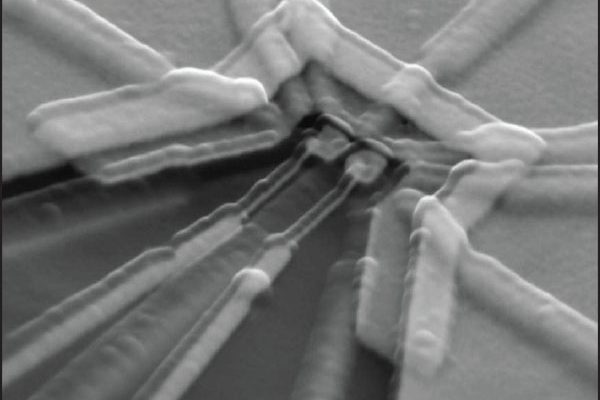
Superconducting qubits are among the most promising technologies due to their potential for long coherence times, low error rates, and compatibility with existing semiconductor fabrication processes.
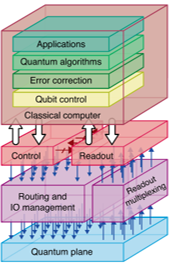
Algorithmic and systems architecture design for quantum computation
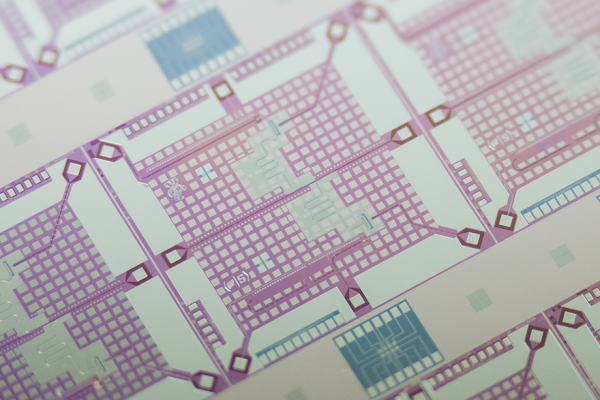
Quantum computers promise incredible speedups for tasks such as simulation, search, and optimization. Quantum algorithm development, verification, and validation (QCVV) methods are necessary to understand and mitigate inevitable errors.
Supporting technologies
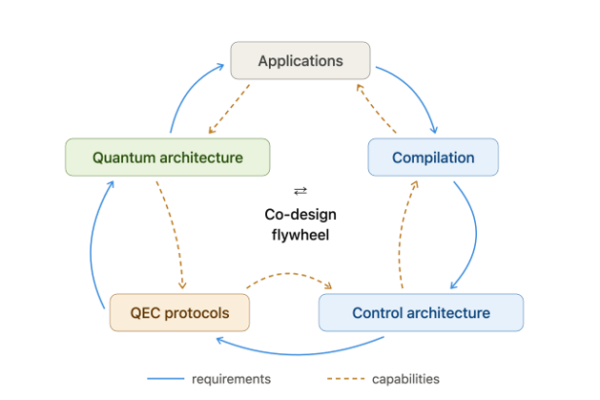
The use of unconventional technologies and integration schemes, all the way from materials to computer architecture, is key to building highly efficient computing systems.
Post-quantum cryptography
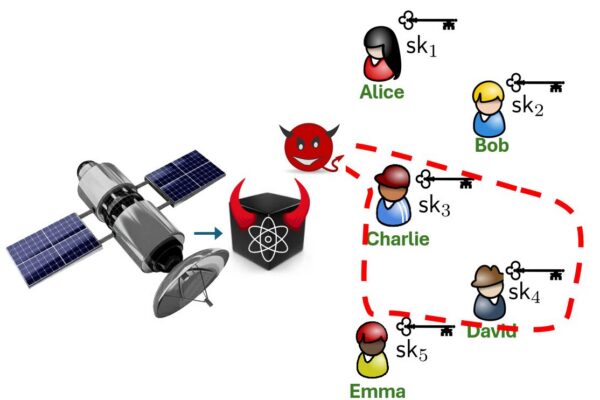
Post-quantum cryptography involves the development of cryptographic algorithms that are resistant to attacks from both classical and quantum computers.