HQAN outreach program brings quantum science to rural Wisconsin
Posted on
HQAN outreach program brings quantum science to rural Wisconsin
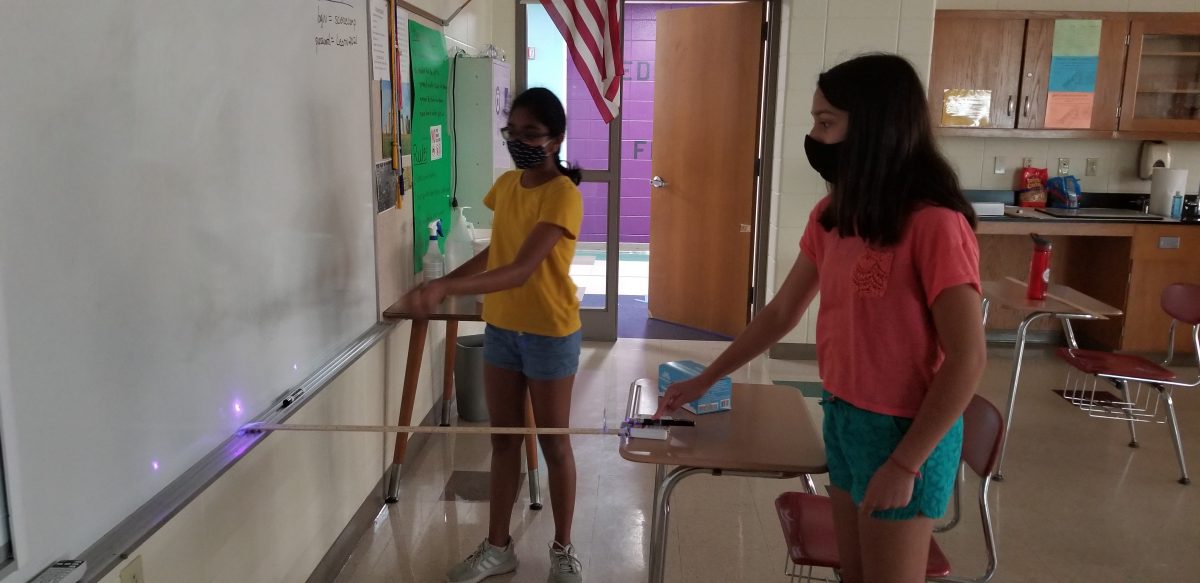
This month, the Wonders of Quantum Physics participated in the UW Biocore’s weeklong science camp in Mazomanie, WI. Read all about it in this article published in the Milwaukee Journal Sentinel.
Deniz Yavuz, Randall Goldsmith awarded funding in first round of UW’s Research Forward initiative
Posted on
Deniz Yavuz, Randall Goldsmith awarded funding in first round of UW’s Research Forward initiative
Deniz YavuzRandall Goldsmith
In its inaugural round of funding, the Office of the Vice Chancellor for Research and Graduate Education’s (OVCRGE) Research Forward initiative selected 11 projects, including projects from WQI’s Deniz Yavuz and Randall Goldsmith.
Yavuz is Principal Investigator and Goldsmith is co-Principal Investigator (along with Dan Van der Weide, professor of electrical engineering) on a project titled “Compact and efficient terahertz optical modulators.”
Goldsmith is co-PI on a second funded project, “Therapeutic targeting of post-transcriptional RNA processing in human diseases.”
OVCRGE hosts Research Forward to stimulate and support highly innovative and groundbreaking research at the University of Wisconsin–Madison. The initiative is supported by the Wisconsin Alumni Research Foundation (WARF) and will provide funding for 1–2 years, depending on the needs and scope of the project.
Research Forward seeks to support collaborative, multidisciplinary, multi-investigator research projects that are high-risk, high-impact, and transformative. It seeks to fund research projects that have the potential to fundamentally transform a field of study as well as projects that require significant development prior to the submission of applications for external funding. Collaborative research proposals are welcome from within any of the four divisions (Arts & Humanities, Biological Sciences, Physical Sciences, Social Sciences), as are cross-divisional collaborations.
Correlated errors in quantum computers emphasize need for design changes
Posted on
Correlated errors in quantum computers emphasize need for design changes
Quantum computers could outperform classical computers at many tasks, but only if the errors that are an inevitable part of computational tasks are isolated rather than widespread events.
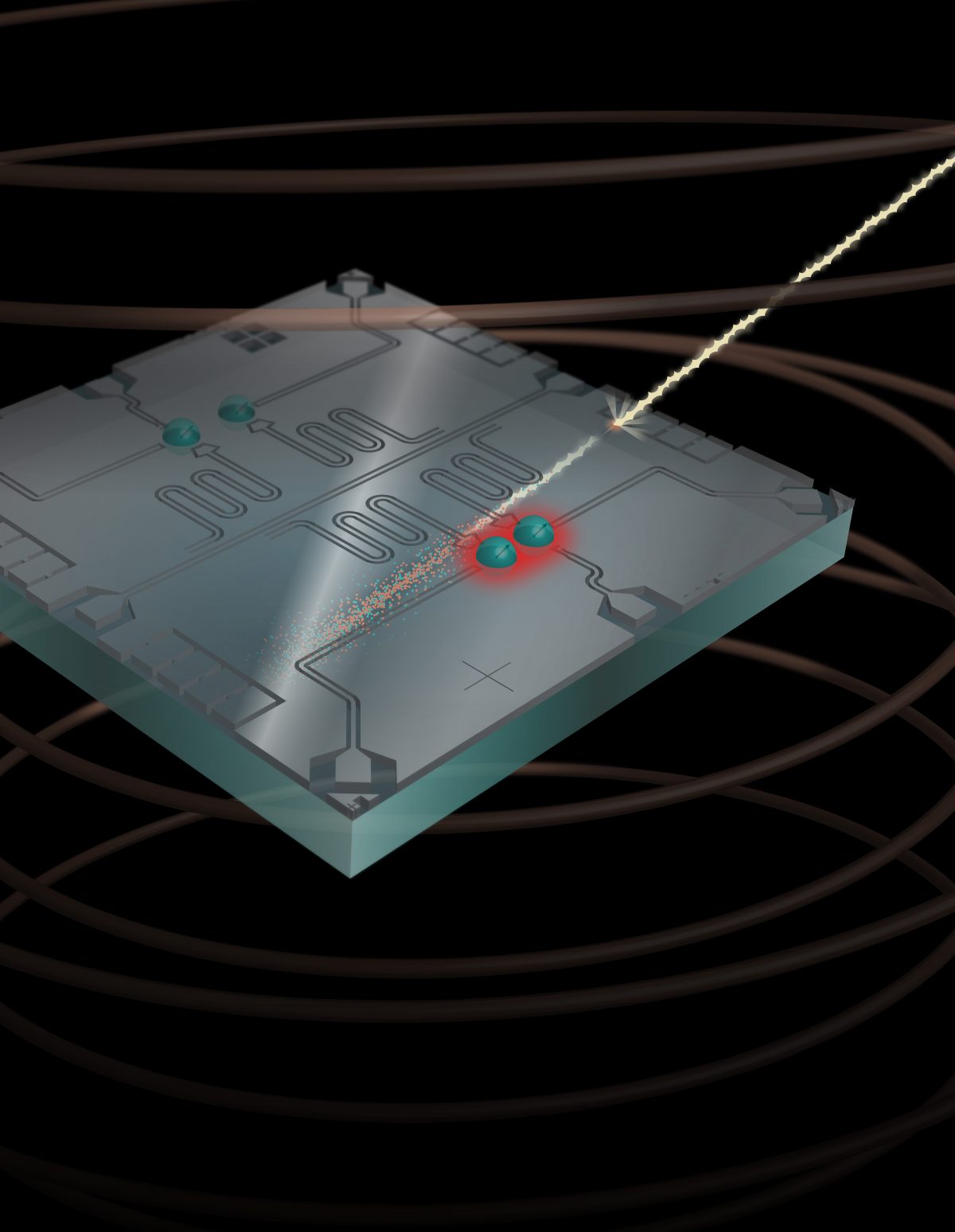
Now, researchers at the University of Wisconsin–Madison have found evidence that errors are correlated across an entire superconducting quantum computing chip — highlighting a problem that must be acknowledged and addressed in the quest for fault-tolerant quantum computers.
The researchers report their findings in a study published June 16 in the journal Nature, Importantly, their work also points to mitigation strategies.
“I think people have been approaching the problem of error correction in an overly optimistic way, blindly making the assumption that errors are not correlated,” says UW–Madison physics Professor Robert McDermott, member of the Wisconsin Quantum Institute and senior author of the study. “Our experiments show absolutely that errors are correlated, but as we identify problems and develop a deep physical understanding, we’re going to find ways to work around them.”
Read the full story at https://news.wisc.edu/correlated-errors-in-quantum-computers-emphasize-need-for-design-changes/